Currently Empty: $0.00
Why Excavator’s Dual Travel Speeds Matter on Different Types of Jobsites
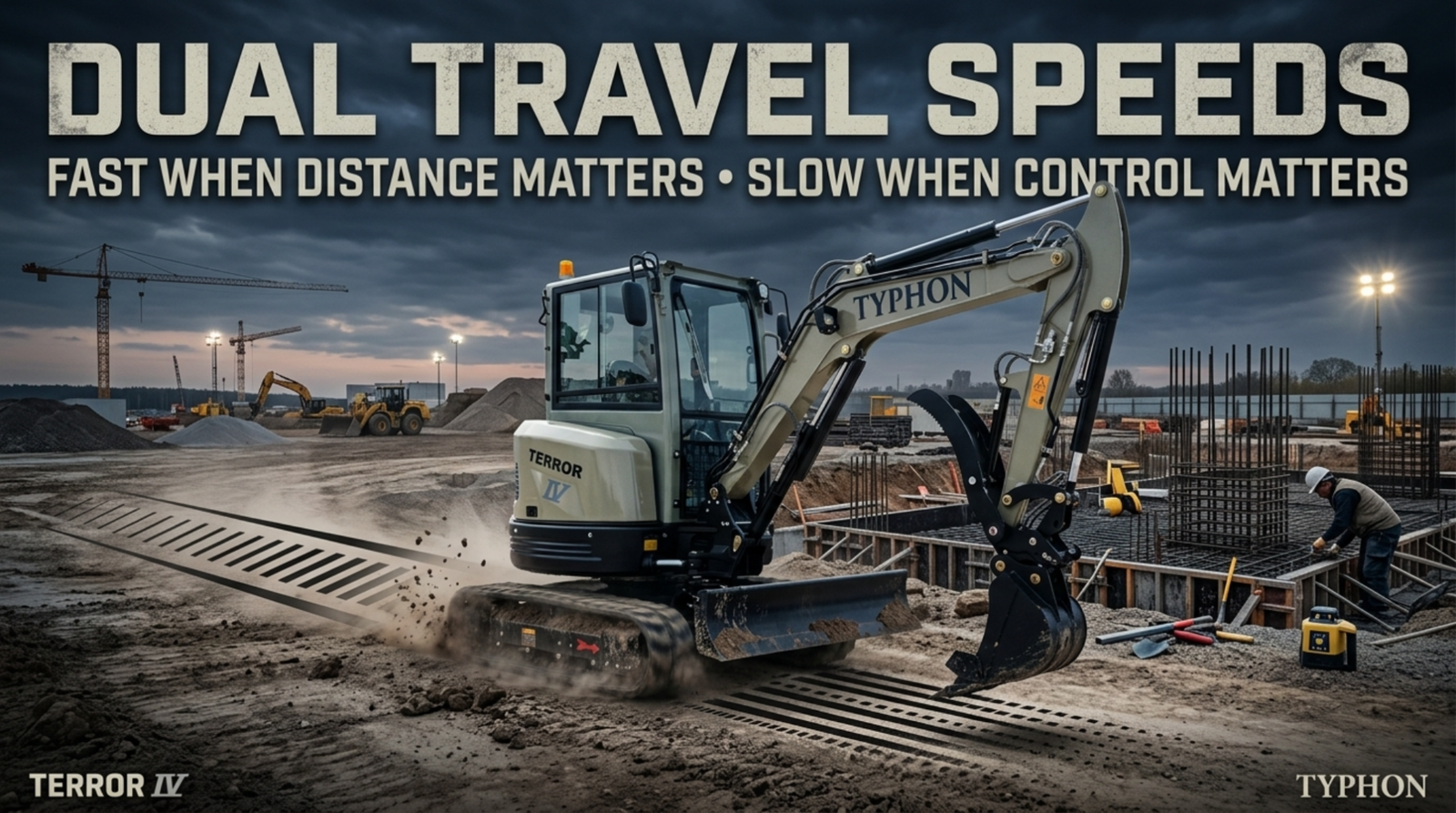
An excavator spends far more of its day moving than many operators realize. Between digging, loading, and repositioning, the machine travels across the site again and again, and how well it handles that travel shapes the pace of the entire operation. Dual travel speeds give an excavator the versatility to move quickly when distance is the priority and slowly when precision matters most. This simple capability makes a real difference across the wide range of conditions a working jobsite presents.
This guide explains why dual travel speeds matter on different types of jobsites. You will learn how switching between fast and slow modes works, how higher speed saves time on larger sites, and how lower speed improves control in tight spaces. You will also see how two speed ranges help the machine adapt to varying ground conditions and how choosing the right speed for each task supports stronger overall productivity.
Switching Between Fast and Slow Travel Modes
Dual travel speeds let operators choose a lower speed for controlled positioning and a higher speed for moving efficiently across the jobsite. This choice sits at the heart of what makes the feature so useful. Rather than being locked into a single pace that compromises between speed and control, the operator selects the mode that suits the task at hand. When distance needs to be covered, the higher speed gets the machine there quickly. When precision is required, the lower speed gives the operator the fine control that careful work demands.
The value of having both modes comes from how different jobsite tasks really are. Moving an excavator across an open site to reach the next work area is a completely different task from easing the machine into position beside a trench or against a wall. One rewards speed, the other rewards restraint, and a machine with only one travel range would always be too fast for one job or too slow for the other.
Switching between the two is designed to be simple and quick, so the operator can adapt as the work changes without interrupting the flow of the job.
- Low speed delivers the controlled, deliberate movement needed for accurate positioning
- High speed provides the faster travel that keeps the machine productive over distance
- Easy switching lets the operator match the mode to each task as conditions shift
This flexibility is what allows a single machine to handle the full variety of travel a jobsite involves. By putting both speed ranges within easy reach, dual travel speeds give the operator confident control over how the excavator moves, laying the foundation for the more specific benefits that follow across different types of sites and tasks.
Faster Movement Across Larger Jobsites
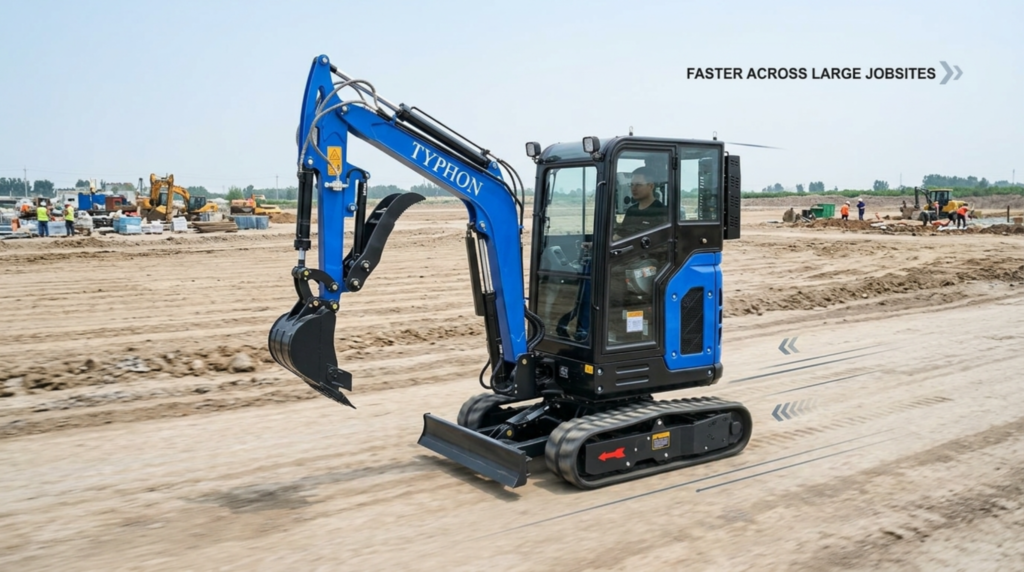
Higher travel speed can meaningfully reduce the time an excavator spends moving between work areas, and this benefit stands out most on larger sites. On expansive construction projects, sprawling landscaping jobs, and wide excavation sites, the machine often has to cover considerable ground just to get from one task to the next. Every trip across the site that happens at a crawl adds up, and over the course of a shift those minutes turn into hours of productive time lost to travel alone.
A higher travel mode addresses this directly. When the excavator can move at a faster pace across open ground, it reaches the next work area sooner and gets back to productive work with less delay. On a large site where the machine may relocate many times a day, this reduction in travel time has a real effect on how much the machine accomplishes. The operator spends more of the day digging, loading, and grading, and less of it simply getting the machine where it needs to be.
Consider the kinds of sites where this matters most:
- Large construction sites, where the excavator moves between foundations, trenches, and staging areas spread across the property
- Landscaping projects, where work areas may be scattered across a wide property with distance between them
- Excavation sites, where the machine repositions frequently across an open, expansive dig
On each of these, the ability to travel quickly between tasks keeps the operation moving at a productive pace. Time saved in transit is time returned to the actual work, which is exactly what a busy site needs. For any project defined by distance and frequent relocation, a higher travel speed is a practical way to keep the excavator efficient and the schedule on track throughout the working day.
Better Control in Tight Working Areas
Lower travel speeds provide the precise, deliberate movement an operator needs when working near buildings, fences, trenches, utilities, or other obstacles. In these situations, speed is the enemy of control. A machine moving too quickly leaves little room to react, and even a small misjudgment can lead to contact with a structure, damage to buried services, or an unsafe situation for workers nearby. Slowing the travel pace gives the operator the fine control required to position the machine exactly where it needs to be.
This precision matters in the many congested settings where excavators regularly work. On a renovation site hemmed in by existing buildings, alongside a trench where the ground drops away, or in an area crossed by marked utilities, the operator has to move the machine carefully and predictably. A lower travel speed lets the machine respond to small inputs with small movements, so the operator can inch into position, hold a precise line, and stop exactly where intended.
The advantages of this controlled movement are clear:
- Reduced risk of striking buildings, fences, or other equipment in close quarters
- Safer work around trenches, utilities, and the crews operating nearby
- Greater accuracy when positioning the machine for careful, confined tasks
This control also protects the finished work and the surroundings. Working near completed landscaping, established structures, or sensitive services calls for a machine that moves only as much as the operator commands, and a low travel speed delivers exactly that. Rather than fighting a machine that wants to move faster than the situation allows, the operator works with confidence, knowing each movement stays measured and controlled. For the tight, obstacle-filled spaces that so many jobs involve, this lower speed range is what keeps operation both safe and accurate.
Matching Travel Speed to Ground Conditions
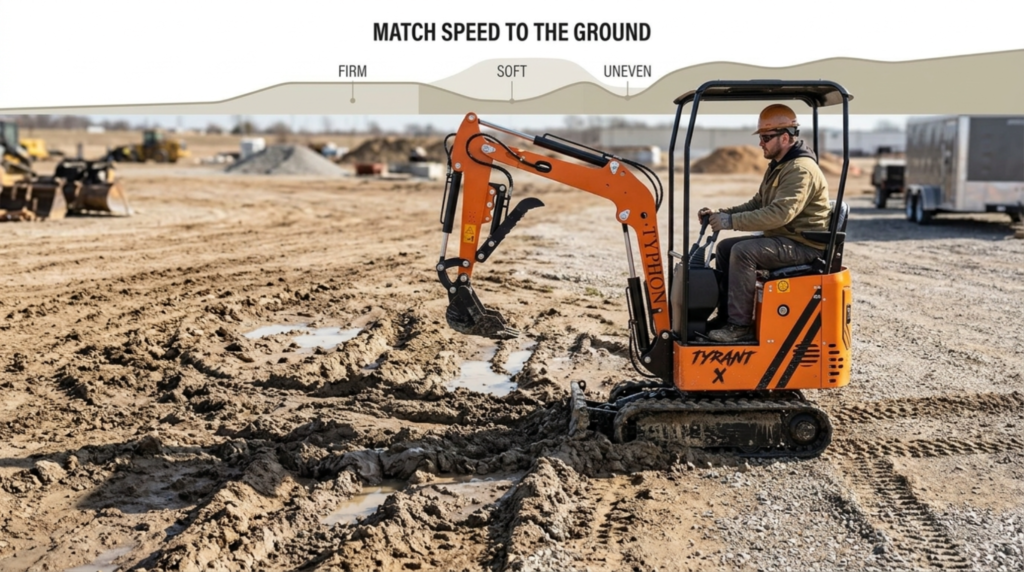
Different surfaces can call for different travel speeds to keep the machine moving in a controlled way, and having two speed ranges gives operators the flexibility to adapt to whatever the ground presents. A jobsite rarely offers a single, consistent surface. Over the course of a project, the excavator may cross firm compacted ground, soft mud, rutted haul routes, and finished areas that demand a gentle touch. Each of these conditions affects how the machine should travel, and a single fixed speed cannot suit them all.
On firm, stable ground, a higher travel speed lets the machine move efficiently without difficulty. When conditions turn soft or muddy, however, a slower pace often gives the operator better control, helping the machine maintain its footing and traction rather than slipping or losing stability. Uneven or rutted ground likewise rewards a measured speed that keeps the machine steady as it crosses irregular terrain. Matching the pace to the surface keeps travel controlled no matter how the ground changes across the site.
Finished ground calls for particular care. When the excavator has to travel across completed surfaces, graded areas, or delicate landscaping, a lower speed helps the operator move the machine gently and minimize disturbance to work that has already been done. Moving too quickly across such ground risks damage that creates extra work to repair. A slower, controlled pace protects the finished result while still getting the machine where it needs to go.
This adaptability is a genuine advantage across varied conditions. With two speed ranges available, the operator can read the ground ahead and choose the pace that keeps the machine controlled and productive, whether that means moving briskly over firm terrain or easing carefully across soft, uneven, or finished surfaces. That flexibility keeps the excavator dependable wherever the ground leads.
Improving Jobsite Productivity
Using the appropriate travel speed for each task can reduce unnecessary movement time while maintaining better control during positioning and operation, and this balance is where dual travel speeds contribute most to overall productivity. Productivity on a jobsite depends not only on how fast the machine works but on how little time it wastes and how few mistakes it makes. Dual travel speeds support both goals at once, letting the operator move quickly when speed helps and slowly when control counts.
The time savings come from using the higher speed wherever it fits. Every trip across the site completed at a faster pace returns minutes to productive work, and across a full shift those savings are substantial. Rather than crawling between distant work areas, the operator covers ground quickly and gets back to digging, loading, or grading sooner. This keeps the machine’s working hours focused on the tasks that actually move the project forward.
At the same time, the lower speed protects productivity in a different way, by helping the operator work accurately and avoid costly errors. Precise positioning means less time spent correcting a machine that overshot its mark, and careful movement around obstacles and finished work prevents the damage and delays that set a project back. Control and speed each contribute to a smoother operation, and having both available lets the operator apply whichever the moment requires.
The combined effect is an excavator that works efficiently across the full range of tasks a jobsite involves. When the operator matches travel speed to each situation, moving fast over distance and slow through precision work, the machine wastes less time and makes fewer mistakes. That is a dependable formula for stronger productivity, and it is exactly what dual travel speeds are designed to deliver on any site.
Conclusion
Dual travel speeds give an excavator the versatility to handle the full range of movement a jobsite demands. A higher speed covers distance efficiently on larger sites, while a lower speed delivers the fine control needed near buildings, trenches, and utilities. Two speed ranges also let the machine adapt to changing ground conditions, from firm terrain to soft, uneven, or finished surfaces, and using the right speed for each task keeps the operation both efficient and controlled.
Before selecting your next excavator, consider the types of sites you work on most and how much travel your projects involve. Think about the distances you cover, the tight spaces you navigate, and the ground conditions you face across a typical job. When you choose a machine with dual travel speeds and use each mode where it fits, you gain a dependable, adaptable tool that keeps material moving and your projects running smoothly from start to finish.
Frequently Asked Questions
1. What are dual travel speeds on an excavator and how do they work?
Dual travel speeds give an excavator two distinct travel ranges: a lower speed for controlled positioning and a higher speed for moving efficiently across the jobsite. Rather than being limited to a single fixed pace that compromises between speed and control, the operator selects the mode that suits the task at hand. When the machine needs to cover distance, the higher speed gets it there quickly, and when precision is required, the lower speed provides the fine control that careful work demands. Switching between the two is designed to be simple and quick, so the operator can adapt as the work changes without interrupting the flow of the job. This flexibility matters because jobsite tasks vary so widely. Moving across an open site to reach the next work area is completely different from easing the machine into position beside a trench, and a machine with only one travel range would always be too fast for one task or too slow for the other. Having both ranges within easy reach lets a single machine handle the full variety of travel a jobsite involves.
2. Which types of jobsites benefit most from dual travel speeds?
Dual travel speeds prove valuable across nearly every type of jobsite, but the benefits stand out most where sites are large or conditions vary widely. Large construction projects, sprawling landscaping jobs, and wide excavation sites all require the machine to cover considerable ground between tasks, so the higher travel speed saves meaningful time as the excavator relocates throughout the day. On these expansive sites, the machine may move many times, and faster travel returns those minutes to productive work. At the same time, sites that include tight, obstacle-filled areas benefit from the lower speed, which lets the operator work carefully near buildings, fences, trenches, and utilities. Many jobsites combine both challenges, with open stretches to cross and confined zones to navigate, and this is exactly where two speed ranges shine. The feature also helps on sites with varied ground conditions, since the operator can match the pace to firm, soft, or finished surfaces. Any project that involves a mix of distance, tight spaces, and changing terrain gains from the versatility dual travel speeds provide.
3. How do travel speeds relate to different ground conditions?
Ground conditions have a direct effect on the travel speed that keeps a machine controlled, and two speed ranges let the operator adapt to whatever the surface presents. On firm, stable ground, a higher speed allows the excavator to move efficiently without difficulty. When conditions turn soft or muddy, a slower pace often gives better control, helping the machine maintain traction and stability rather than slipping. Uneven or rutted ground likewise rewards a measured speed that keeps the machine steady as it crosses irregular terrain. Finished ground calls for particular care, since traveling across completed surfaces, graded areas, or delicate landscaping at a lower speed helps the operator move gently and minimize disturbance to work already done. Moving too quickly across such ground risks damage that creates extra repair work. Because a jobsite rarely offers a single consistent surface, the ability to choose a pace that suits each condition keeps travel controlled throughout the project. The operator can read the ground ahead and select the speed that keeps the machine both productive and stable, whatever the terrain.
4. Why does a lower travel speed improve control in tight spaces?
A lower travel speed improves control because it lets the machine respond to small inputs with small, predictable movements, which is exactly what confined work requires. When an excavator operates near buildings, fences, trenches, utilities, or other obstacles, there is little room for error, and a machine moving too quickly leaves the operator little time to react. Slowing the pace gives the operator the fine control needed to inch into position, hold a precise line, and stop exactly where intended. This precision reduces the risk of striking structures or equipment, protects buried services and the crews working nearby, and improves accuracy when positioning the machine for careful tasks. It also protects finished work and sensitive surroundings, since working near completed landscaping or established structures calls for a machine that moves only as much as the operator commands. Rather than fighting a machine that wants to move faster than the situation allows, the operator works with confidence, knowing each movement stays measured. For the congested, obstacle-filled spaces that so many jobs involve, this controlled low-speed range is essential to keeping operation both safe and accurate.
5. How do dual travel speeds improve overall jobsite productivity?
Dual travel speeds improve productivity by helping the operator save time where speed helps and avoid costly errors where control counts. The time savings come from using the higher speed to cover ground quickly between work areas. Every trip completed at a faster pace returns minutes to productive work, and across a full shift those savings add up, keeping the machine focused on digging, loading, and grading rather than crawling between tasks. The lower speed protects productivity in a different way, by supporting accurate positioning and careful movement that prevent mistakes. Precise work means less time spent correcting a machine that overshot its mark, and controlled movement around obstacles and finished areas prevents the damage and delays that set a project back. Both speed and control contribute to a smoother operation, and having both available lets the operator apply whichever the moment requires. When the operator matches travel speed to each situation, moving fast over distance and slow through precision work, the machine wastes less time and makes fewer mistakes, which together deliver stronger productivity across the whole jobsite.